


Description
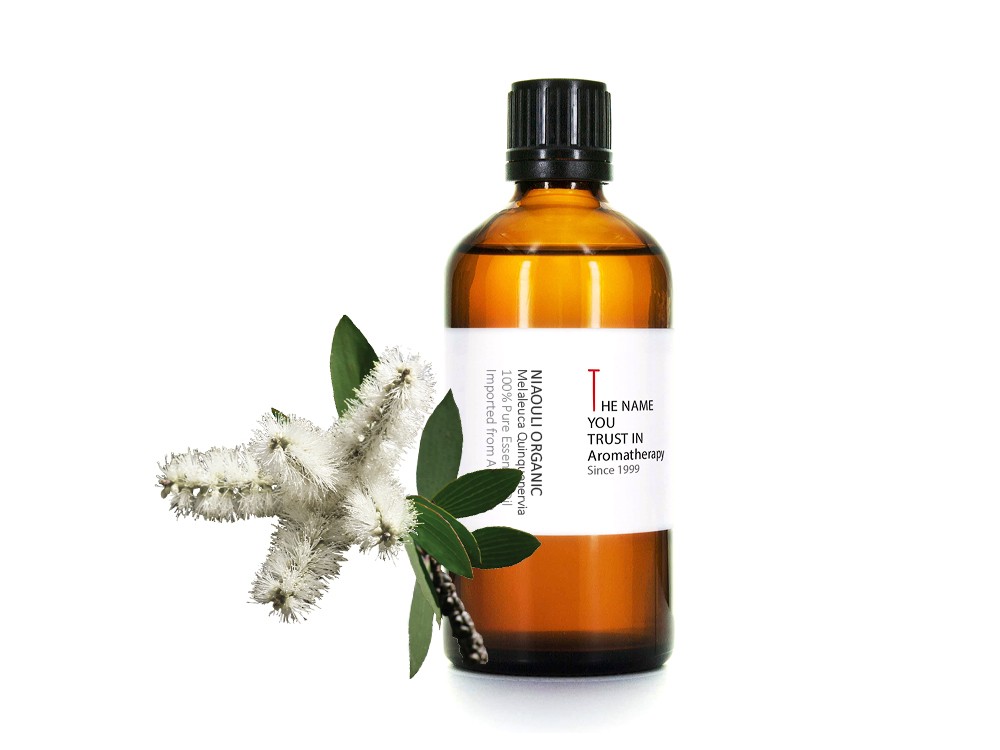
Niaouli Essential Oil
Botanical Name Melaleuca Quinquenervia, extract from Niaouli's leaves and twigs by steam distillation. Niaouli is so closely related to Cajeput, that the two are sometimes confused. However, there are sufficient differences in the composition, odour and properties of the two oils, the reason why it is so important to distinguish clearly between this oil and its cousin is that unlike Cajeput which is a skin irritant.
Niaoili is well tolerated by the skin and mucous membranes when used in suitable dilutions. It can therefore be safely used for massage, as a gargle and even as a vaginal douche. It is good for cystitis and other urinary infections. It is also suitable for cleaning minor wounds and burns. For cuts and grazes, especially if any dirt has got into them at the time of injury, mix 5 to 6 drops of Niaouli in 1/2 pint (250ml) of boiled and cooled water and wash out repeatedly. For burns, the oil can be sprinkled neat on a sterile gauze and fastened over the burn. It is a powerful tissue stimulant and will therefore help healing. A thin layer of Niaouli applied to the skin gives some protection against burning of the skin and has been shown to reduce the severity of such burns, The tissue stimulating properties probably help the burns to heal faster. Because it is non-irritant and powerfully antiseptic, this is a good oil for the treatment of acne and similar skin conditions such as boils. Niaouli also is good for all respiratory tract infections, whether they affect the nose, throat or chest, and is used in chest rubs as well as inhalations. It is quite a powerful stimulant, so it is better not to use it late in the evening, unless mixed with more sedative oils such as Lavender, or sleep may be disturbed.
The oil is obtained from the leaves and young twigs, and varies from pale to dark yellow. It has a very strong, hot, camphorous odour and contains between 50% and 60% of cineol, eucalyptol, terpineol, pinene, limonene and various esters.
Niaouli Essential Oil Benefits
Analgesic, Antirheumatic, Antiseptic, Baslsamic, Bacteriacide, Cicatrisant, Decongestant, Febrifuge, Insecticide, Stimulant, Vermifuge, Vulnerary.
Promoting local circulation, increasing white blood cells and antibody activity, helping to fight infections. A good oil to choose at the beginning of illness to fortify the body and indeed useful in any weakened condition. Niaouli has a decided impact on the respiratory system, dealing with such problems as chest infections, bronchitis, tuberculosis, influenza, pneumonia, whooping cough, asthma, sinusitis, catarrh and laryngitis. Also has a tonic action on the intestines and may be effective against enteritis, dysentery, intestinal parasites as well as dealing with urinary infections. Its pain relieving properties seem to give some aid to rheumatism and neuralgia.
Niaouli Oil Treating Mental And Emotional
Stimulating and reviving, clears the head and may aid concentration.
Niaouli Oil Effect on Skin
Aids healing and may helpful with skin eruptions, acne, boils, ulcers, burns and cuts. Useful for washing infected wounds.
Niaouli Well Blend oils
Coriander, Fennel, Galbanum, Juniper, Lavender, Lemon, Lime, Myrtle, Organic Sweet, Pine, Peppermint, Rosemary, Basil, Cajeput, Eucalyptus, Tea Tree and Thyme. The note is Middle.
100% Pure Natural
Purity aromatherapy therapeutic quality Niaouli Essential oil, no additive, no artificial color, no animal test.
Specification
Products Information |
|
|---|---|
| Purity Ingredients | 100% Pure Essential Oil |
| Chinese Name | 綠花白千層精油 |
| Product Name | Niaouli Essential Oil |
| Botanical Name | Melaleuca Quinquenervia |
| Country Origin | South Africa |
| Imported | Australia |
| Extraction | Steam Distillation |
| Specification | Class III Restricted |